CISA Adds Langflow, Tomcat, and N-central Flaws to the KEV Catalog: What Website Owners Should Do
On August 5, 2026, CISA added three actively exploited flaws to its KEV catalog, including a critical Langflow RCE, an Apache Tomcat path handling bug, and an N-central remote code execution chain. Here is what hosting customers and developers should patch first.
On August 5, 2026, the U.S. Cybersecurity and Infrastructure Security Agency added three security flaws to its Known Exploited Vulnerabilities (KEV) catalog after receiving evidence of active exploitation in the wild. The list covers a code injection issue in Langflow, a path-handling weakness in Apache Tomcat, and a remote code execution chain in N-central. Each entry carries serious risk for the teams that deploy these tools, and federal agencies now have a binding remediation deadline. Private-sector website owners and hosting customers should treat the same flaws as urgent, because active exploitation is the clearest signal that defenders are losing time.
Key Takeaways
- CISA added three new entries to the KEV catalog on August 5, 2026, all backed by evidence of real-world exploitation.
- The most severe entry is CVE-2026-9198, a code injection flaw in Langflow with a CVSS score of 9.8 that allows unauthenticated attackers to reach full remote code execution.
- The Apache Tomcat and N-central entries are also classified as remotely exploitable with low complexity, which is the profile attackers prefer when scanning the internet.
- Federal agencies must remediate under CISA's Binding Operational Directive, and private organizations should align their patch cycles with the same deadlines.
- Hosting environments, AI workflow platforms, and RMM consoles are the three surfaces to audit this week.
What Changed in the KEV Catalog
The Known Exploited Vulnerabilities catalog is CISA's authoritative list of bugs that have credible evidence of being weaponized. Inclusion does not by itself confirm mass exploitation, but it signals that the agency has enough telemetry, vendor confirmation, or incident reports to treat the issue as a live threat. For defenders, KEV listings are the single best filter for deciding what to patch first when the queue is long.
On August 5, 2026, the catalog gained three remote code execution or remote code execution-adjacent entries spanning an AI orchestration framework, a Java web server, and a remote monitoring and management platform used by managed service providers.
The Three Flaws at a Glance
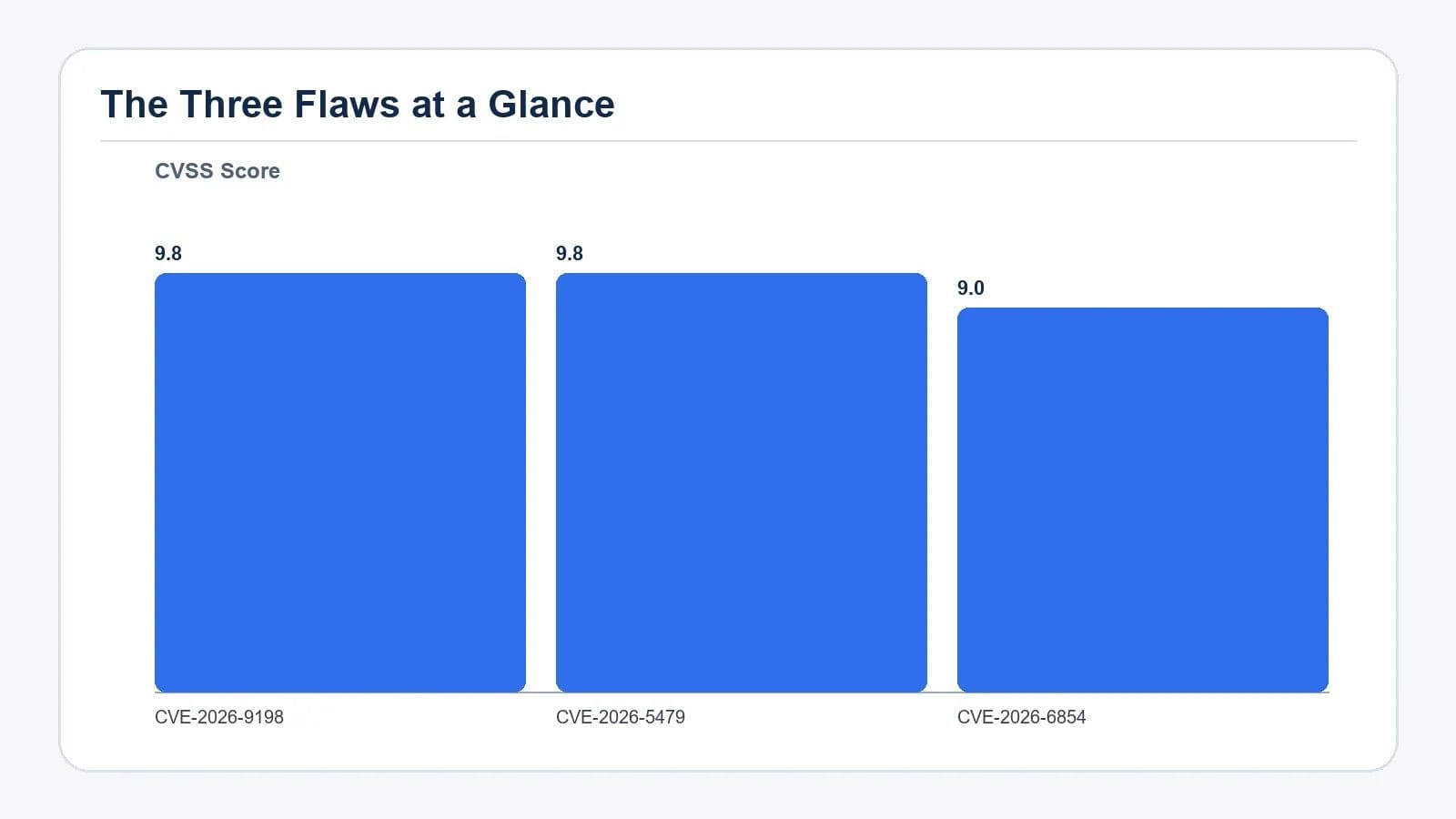
| Vulnerability | Affected Product | CVSS Score | Type of Flaw | Exploitation Posture |
|---|---|---|---|---|
| CVE-2026-9198 | Langflow | 9.8 | Unauthenticated code injection leading to full RCE | Actively exploited in the wild |
| CVE-2026-5479 | Apache Tomcat | 9.8 | Path equivalence vulnerability enabling RCE | Actively exploited in the wild |
| CVE-2026-6854 | N-central | 9.0 | Improper authentication chain leading to RCE | Actively exploited in the wild |
The CVSS scores reflect worst-case impact, but the KEV listing is what changes the operational urgency. A 9.8 score in the abstract is a planning item; a 9.8 score on the KEV list is a this-week item.
How Each Flaw Can Be Reached
Langflow Code Injection (CVE-2026-9198)
Langflow is a visual framework for building AI workflows and connecting them to large language models. A successful compromise gives the attacker the same level of access as the application process, which on shared infrastructure may be enough to pivot into neighbouring tenants or stored credentials.
Apache Tomcat Path Handling (CVE-2026-5479)
Tomcat's path equivalence handling has been a recurring source of serious bugs, and this entry follows the same pattern. Tomcat runs a significant share of Java-based web applications, so even a single unpatched instance can put customer data at risk.
N-central Authentication Chain (CVE-2026-6854)
N-central is a remote monitoring and management platform used by managed service providers to administer large fleets of customer endpoints. Because N-central consoles centralise control over many downstream customers, a compromise here is a multiplier event rather than a single-tenant problem.
Why This KEV Update Matters for Website Owners
Most website owners do not run Langflow, Tomcat, or N-central directly, and that is exactly why this catalog update matters. A few practical reasons to pay attention:
- Hosting providers that embed Tomcat-based admin panels need to confirm their images are patched; otherwise, customer isolation could fail.
- SaaS platforms that ship Langflow or similar AI workflow builders may inherit the risk, even when the user's site is a static front end.
- Managed service providers running N-central need to confirm that endpoint management is patched, because a compromise puts the customers they administer at risk.
Priority Patching and Federal Deadlines
CISA issues Binding Operational Directives that require federal civilian agencies to remediate KEV entries on a fixed schedule. Teams that already operate a vulnerability management program should treat each KEV addition as a stand-up meeting: confirm scope, assign an owner, and track to closure.
For website owners working with a hosting partner, the right next step is to ask for written confirmation that the platform images, control panels, and any bundled AI tooling are patched against the three CVEs listed above.
Useful Related Reading
- cve 2026 66066 rails active storage rce
- sharepoint rce cve 2026 50522 exploitation
- Malware Removal and Security
Practical Defense-in-Depth Measures
Patching is the single most important action, but a few layered controls reduce blast radius while you wait for maintenance windows:
- Place any internet-facing Langflow, Tomcat, or N-central instance behind a web application firewall, and block known exploit patterns until the upstream patch is applied.
- Restrict management consoles to a VPN or zero-trust network access rather than exposing them on a public IP.
- Rotate any secrets that lived on a vulnerable host, because code injection flaws often lead to credential theft before the patch is deployed.
- Review egress firewall rules so that a compromised process cannot easily reach attacker-controlled infrastructure.
- Confirm that logging and detection rules cover the affected applications, including command execution by Java and Python processes that should not normally spawn shells.
For a broader application-layer perspective, the Cloudflare waf WordPress vulnerabilities 2 guide covers how a WAF can absorb exploit traffic while a patch is tested, and the cisco fmc zero day cve 2026 20316 write-up explains how quickly defenders moved when that earlier KEV entry landed.
An Action Checklist for the Rest of the Week
- Inventory every host that runs Langflow, Apache Tomcat, or N-central, including staging and demo environments.
- Apply vendor patches or upgrade to a fixed version on every instance, starting with the ones reachable from the internet.
- Confirm with your hosting or MSP partner that shared infrastructure images and control panels are patched against all three CVEs.
- Treat any host that was exposed before patching as potentially compromised: rotate credentials, review shell history, and scan for persistence.
- Update vulnerability management policies so that future KEV additions trigger the same review within 24 hours.
Frequently Asked Questions
What did CISA add to the KEV catalog on August 5, 2026?
CISA added three vulnerabilities to its Known Exploited Vulnerabilities catalog on August 5, 2026: CVE-2026-9198 in Langflow, CVE-2026-5479 in Apache Tomcat, and CVE-2026-6854 in N-central. All three have evidence of active exploitation in the wild, and each enables remote code execution under the right conditions.
Why is the Langflow flaw rated critical?
CVE-2026-9198 carries a CVSS score of 9.8 because it is a code injection vulnerability reachable without authentication. An attacker can craft a request that injects code into the Langflow process and execute it as the application, which on shared infrastructure can lead to account-wide impact rather than a single-tenant issue.
Do private companies have to meet the CISA deadline?
Binding Operational Directives apply to U.S. federal civilian agencies, not private organisations. In practice, hosting providers, managed service providers, and security teams use the CISA deadlines as a working baseline because they reflect how quickly the agency believes the flaw must be closed.
How can a website owner tell if they are affected?
Ask your hosting provider whether any shared infrastructure component, AI workflow builder, or remote management console runs Langflow, Tomcat, or N-central. If you self-manage a Java application server or an AI orchestration tool, check the version against the vendor advisory and confirm that the fixed release is installed.
What should teams do if a host was exposed before the patch?
Treat the host as compromised. Rotate every secret stored on or accessible from the host, including API keys, database credentials, and SSH keys. Review process and command logs for unexpected shell activity, look for scheduled tasks or new services, and consider a clean rebuild if the exposure window was long.
Conclusion
The August 5, 2026 KEV update is a reminder that critical flaws do not stay theoretical for long once they are public. Three different platforms, all rated at the high end of the CVSS scale, are now confirmed as actively exploited, and the same week is the right window to confirm scope, apply patches, and review exposure. Treat CISA's deadline as your own, lean on your hosting partner for shared infrastructure, and rotate anything that lived on a vulnerable host before the fix was applied. Defenders lose when patches slip, not when flaws are disclosed, and KEV listings are the cleanest signal defenders get about where to focus first.